

Retail Bank Marketing Trends to Watch in 2026
By ProGrowth Team · Published
Retail bank marketing in 2026 is driven by AI adoption, data-led trust, personalization, fintech competition, revenue-focused marketing, and social/AI search shifts. While banks are adopting AI rapidly, many marketers still lack confidence in using it effectively.
ProGrowth Team
May 25, 2026
Top 6 Bank Marketing Strategies Driving Retail Banking Growth in 2026
Bank marketers are using AI at nearly twice the rate they were a year ago. Most still rate their own AI expertise as low.
That gap, adoption racing ahead of confidence, is the defining tension in the 2026 ABA/Capital Performance Group Bank Marketers survey. It maps onto the wider industry data almost perfectly. KPMG's Banking Strategic Benchmarking Insights 2025 found that 65% of banking CEOs rank GenAI as a top investment priority. Yet the Digital Banking Report finds that only 6% of banks have deployed AI-powered personalization at any meaningful scale.
The tools are in the building. The strategy is not.
For community banks, regional banks, and credit unions, that gap creates both a challenge and an opening. Institutions that move from experimentation to execution in 2026 build advantages that compound. Those that wait close a harder gap every quarter.
Capital Performance Group, drawing from its client work and annual ABA bank marketing surveys, identified six trends reshaping retail bank marketing this year. Each one means something in practice, and acting on it requires certain steps.
1. Using AI to boost marketing productivity
AI is no longer a conference panel topic. It is a production tool.
Capital Performance Group's analysis of the ABA Bank Marketers survey found that AI adoption among bank marketers nearly doubled year over year, with content creation emerging as the most impactful use case. Banks generating more content, more frequently, and at lower cost hold a measurable edge in organic search visibility, social reach, and lead nurturing.
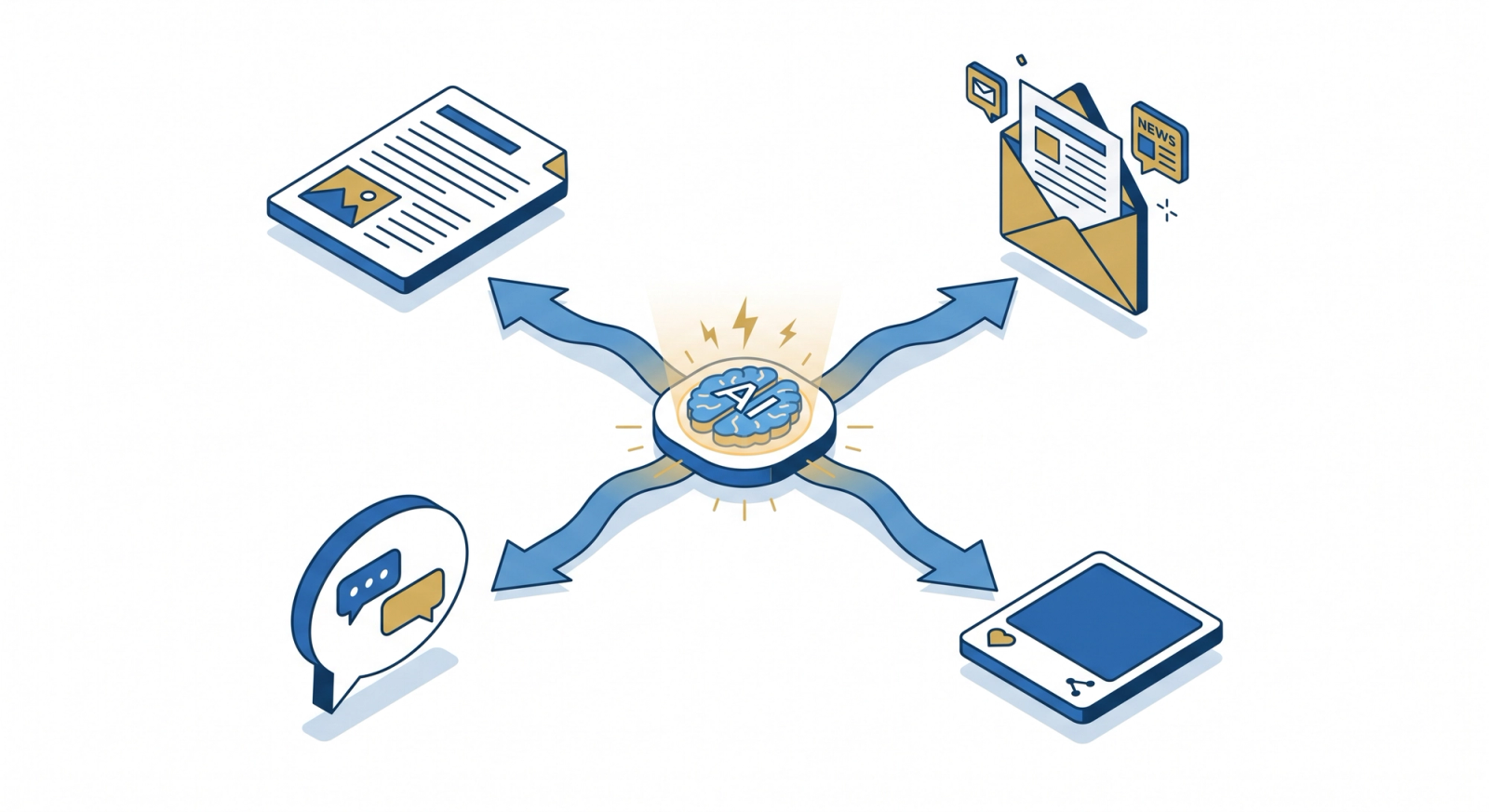
The practical applications cluster around three areas. First, content: AI drafts first-pass blog posts, email campaigns, product explainers, and branch-level social copy. Second, journey mapping: AI tools identify where prospects stall and model which messages move them forward. Third, chatbots: conversational AI on websites and mobile apps handles routine questions, qualifies leads, and routes service requests around the clock.
The confidence gap is real. CPG notes that most bank marketers in the ABA survey rated their AI expertise as low. That is not an argument for waiting. It is an argument for working with partners who have already operationalized these workflows and can bring the capability without requiring a full internal buildout.
For the many community and regional banks without large in-house marketing teams, AI-assisted content production is the entry point with the fastest return. Bank marketing strategies built on consistent, quality content compound over time.
2. Data-driven trust and privacy as brand differentiators
Fraud is rising. Scams are more sophisticated. Customers pay attention to which institutions treat their data carefully and which do not.
The ABA/CPG survey identifies data-driven trust as one of the defining brand differentiators of 2026. This means more than compliance. It means making privacy visible. Banks that communicate clearly about how customer data is collected, used, and protected build brand equity that competitors cannot replicate quickly.
Achieving that kind of transparency requires cross-functional alignment. Marketing, IT, legal, and compliance teams need a shared data governance framework and clear customer consent protocols before personalization can scale responsibly. Trust-based messaging, showing customers what you know and what you do with it, is now a conversion factor in digital marketing for banks, not a footnote in the privacy policy.
This trend creates a particular opening for community banks and credit unions. The "local and accountable" brand position becomes far more credible when backed by demonstrable privacy practices, not just warm community-feel advertising. National banks and fintechs carry more reputational weight around data harvesting. Local institutions that call out their data stewardship clearly, and often, own a position the big players simply cannot claim.

3. Practical personalization via smart segmentation
The Digital Banking Report found that only 6% of banks have deployed AI-powered personalization at scale. That number will move quickly. But the lesson is to start with smart segmentation and build outward from there.
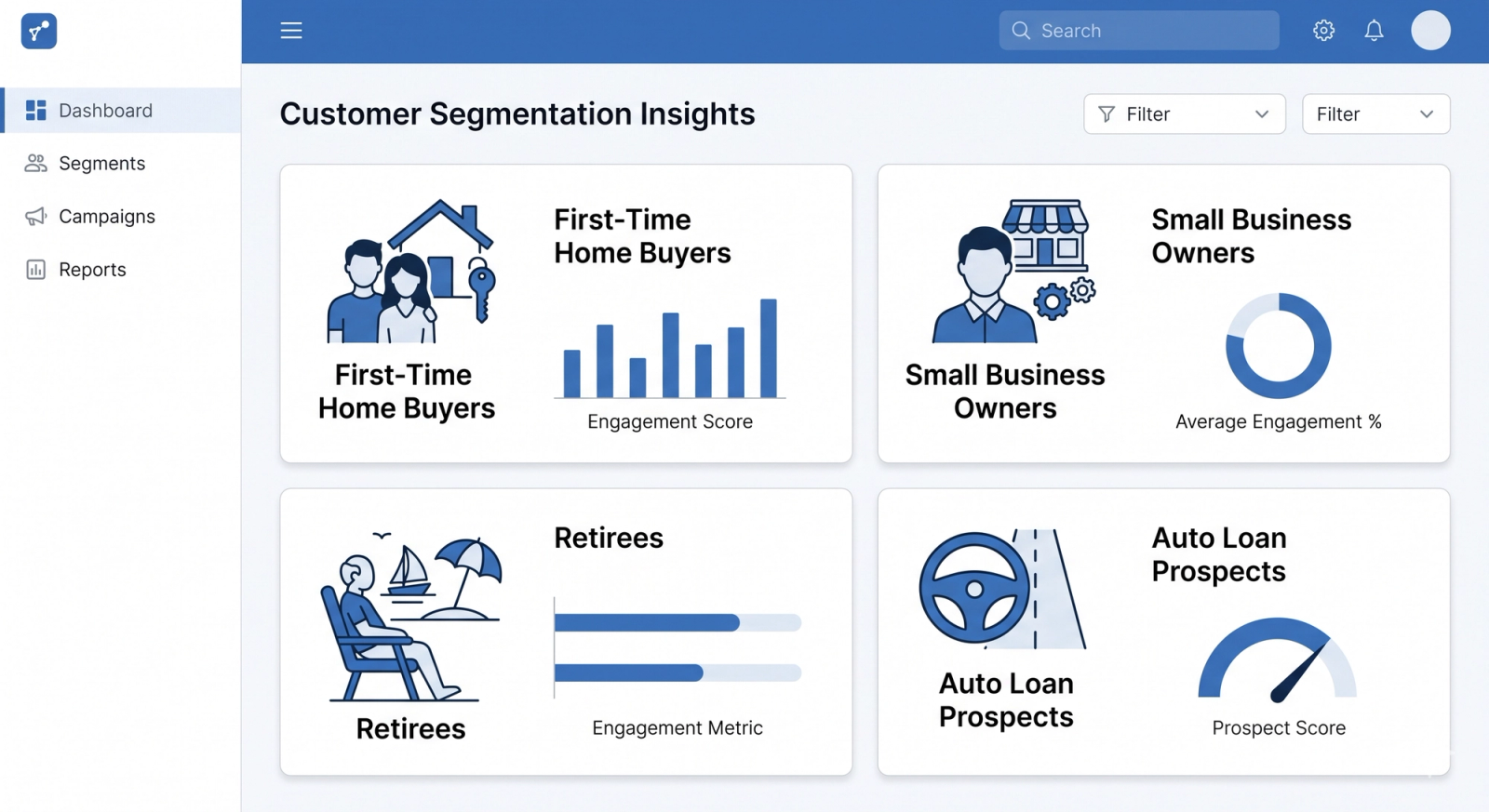
CPG is direct on this point: personalization does not require individual-level targeting for every customer. Effective segmentation by life stage, product relationship, channel behavior, or account balance tier produces meaningfully personalized experiences without requiring enterprise-grade infrastructure or a complete data overhaul.
Community banks and credit unions carry a structural advantage here. They know their markets. A bank serving three rural counties understands what a 34-year-old first-time homebuyer in that geography actually cares about. Combining that institutional knowledge with basic behavioral segmentation across email, paid social, and web delivers relevance that a national bank matching generic audience segments simply cannot replicate.
Bank marketing trends in 2026 do not require a multi-million-dollar tech stack to feel personal. They require sound segmentation logic, consistent execution, and enough content volume to serve each segment with something relevant. That last piece, the content volume, is where AI-assisted production changes the equation completely.
4. Differentiating against non-bank competitors
The fintech and neobank threat is no longer theoretical. Neobanks captured up to 44% of new account openings in key markets in 2025 and 2026. The global neobank market is projected at approximately $385 billion in 2026, growing at a compound rate that outpaces traditional deposit growth across most community banking markets.
Fintechs compete on speed, interface design, and frictionless onboarding. They rarely compete on local trust, regulatory reliability, full-service banking relationships, or community accountability. Those attributes belong to community and regional institutions. But only if they are actively marketed.
Too many community banks hold this advantage silently. Branch managers carry relationships that no app replicates. Loan officers know borrowers by name and by circumstance. That story does not tell itself. Effective bank marketing strategies in 2026 make the relationship banking proposition explicit, specific, and digital.
The right digital marketing for banks in this environment is not trying to out-app a neobank. It is making the case that a bank with 50 years of local lending history and a relationship manager who answers the phone is a different product, not just an older one. Younger customers, including first-time homebuyers and small business owners, want both the convenience of digital tools and the reliability of a real relationship. Community banks and credit unions can offer both. Most fintech challengers can only offer one.
See how ProGrowth helps community banks and credit unions compete with fintechs on their own terms.

5. Repositioning marketing as a revenue driver
The framing of marketing as a budget line item is fading fast among growth-oriented banks. The institutions gaining the most from their digital marketing investments connect campaigns directly to deposit growth, loan originations, and product cross-sell rates – not just impressions and click-throughs.
The American Banker 2026 AI Talent Shift Survey found that 71% of banking executives cite improving staff productivity as the top rationale for AI investment, with workflow automation close behind. When marketing operations become more efficient, every dollar produces more output: more campaigns, more content, more qualified touchpoints per month.
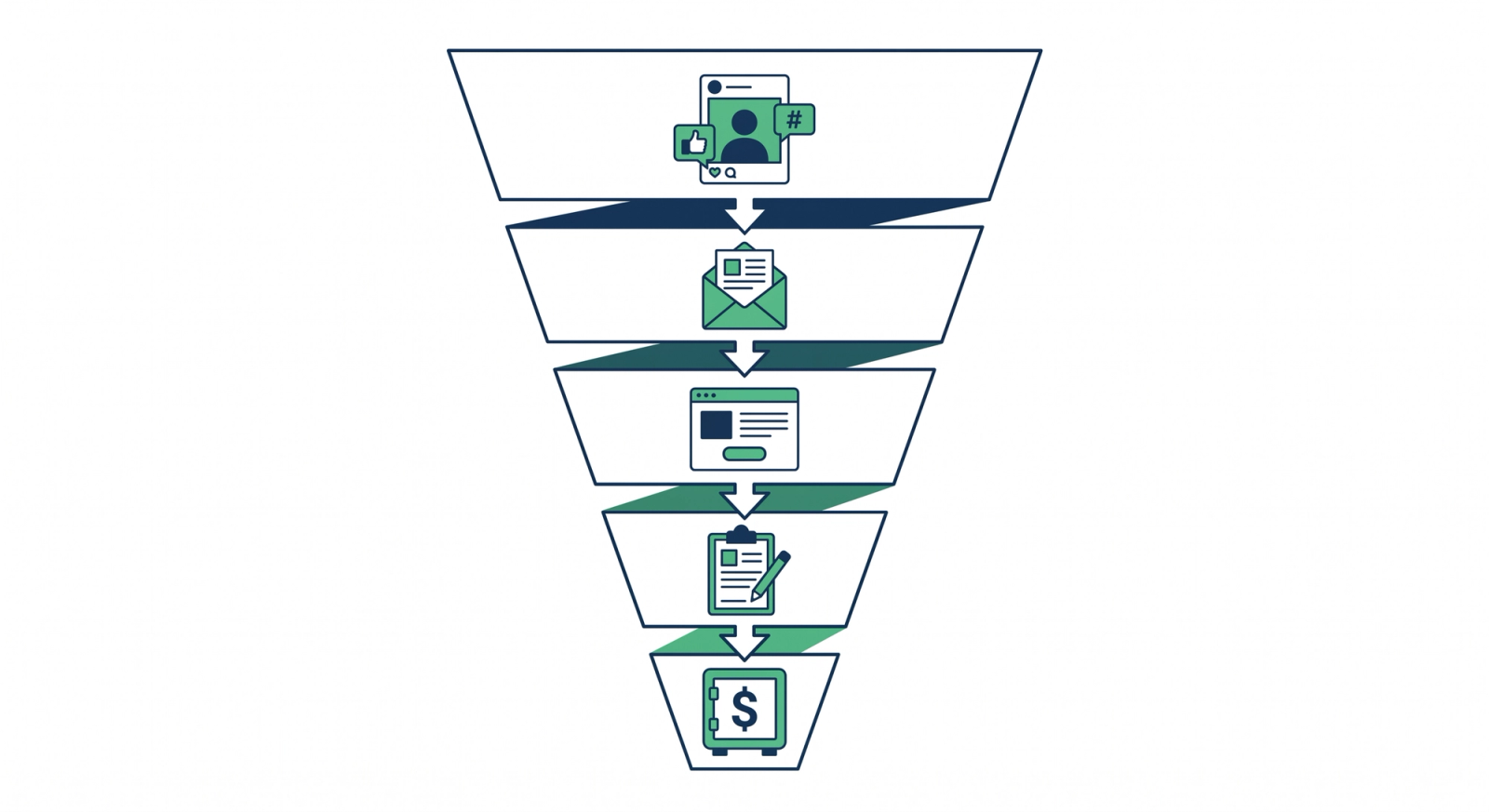
For the marketing-as-revenue-driver shift to take hold, three things need to align. Marketing needs attribution models that connect channel activity to business outcomes. The team needs automation tools that cut manual execution time. And the marketing calendar needs to track against the bank's loan and deposit growth goals, not just its compliance calendar.
This is where the fractional model creates an asymmetric advantage for smaller institutions. A community bank with a $400K annual marketing budget cannot hire a full-time CMO, a digital strategist, a content producer, and an automation specialist. But with the right fractional partner, it runs all four functions simultaneously.
ProGrowth's AI marketing and automation services for banks give community and regional institutions the production capacity of a full marketing department at a fraction of the cost. See how our AI marketing services work for credit unions and banks.
6. Shifting the media mix to social and AI search
Two structural changes are reordering how banking prospects find and evaluate financial institutions: social media has become a primary discovery channel, and AI-powered search is changing which content gets surfaced in response to financial queries.
CPG flags this media-mix shift as one of its six defining trends for bank marketers in 2026. The ABA Bank Marketers survey from mid-2025 had already identified search engine marketing and optimization as the channel delivering the strongest returns, driven by customers beginning their banking journeys online.
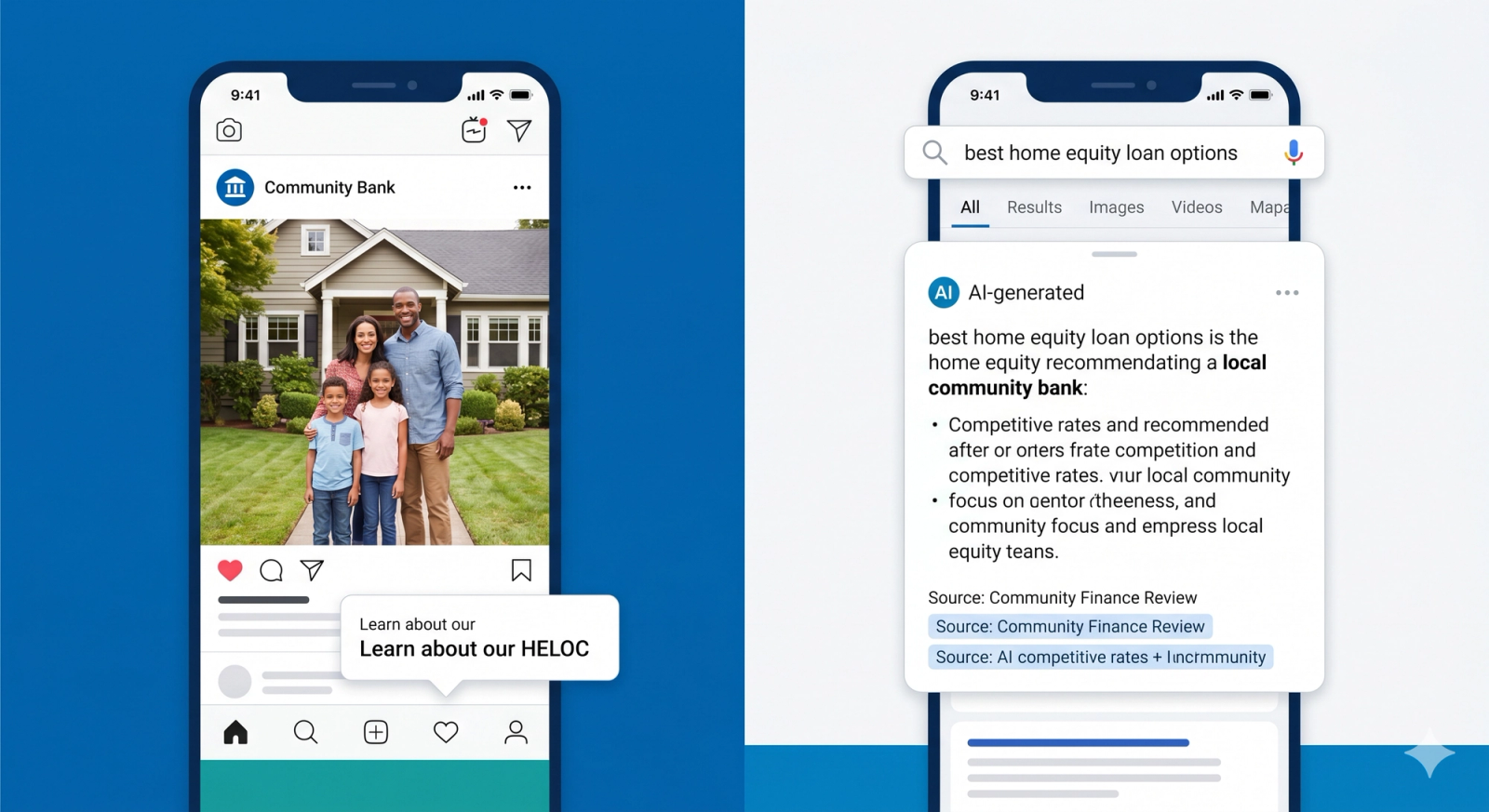
Generative Engine Optimization (GEO) now matters for community banking in a way it did not two years ago. AI tools like ChatGPT, Google AI Overviews, and Perplexity intercept queries that once went straight to Google results. A consumer asking "which community bank offers the best HELOC rates in [city]" may receive an AI-generated answer that never surfaces a traditional results page. Banks whose content directly answers those questions – with local specificity, competitive detail, and authoritative sourcing – get cited. Banks with thin or undifferentiated content do not appear at all.
On the social side, short-form video, educational content, and community storytelling consistently outperform static promotional posts. Facebook and Instagram still drive meaningful engagement for local banking audiences. LinkedIn matters for commercial banking and business deposit acquisition. Both channels require higher content volume than most community bank marketing teams can sustain manually.
Operationalizing both – GEO-optimized content and multi-platform social – without burning out a two-person marketing team requires either a significant in-house hire or an outside partner who builds and runs the content engine. Explore ProGrowth's fractional CMO services for community banks and credit unions.
Where does your institution stand? A quick maturity check
Not every bank starts from the same place. This four-stage framework helps identify where to focus effort first.
Foundation Stage At this stage, banks lack consistent content output, have little or no marketing attribution, and mostly run campaign-by-campaign activities. The priority should be creating a structured editorial calendar and implementing basic channel tracking systems.
Building Stage Banks begin producing content regularly and collecting some channel performance data, though automation remains limited. The focus should shift toward behavioral segmentation and email automation to improve targeting and engagement.
Scaling Stage Multiple marketing channels are active, attribution systems are established, and AI tools are being used for content creation. Banks should prioritize expanding into social video content and GEO-optimized content strategies to increase reach and visibility.
Leading Stage Banks at this level use full attribution models, AI-assisted personalization, and continuously optimize their media mix. The key priority is ongoing testing, rapid iteration, and strengthening competitive positioning against fintech companies.
Most community banks and credit unions sit in the Foundation-to-Building range. The gap between Foundation and Scaling has never been faster to close than it is right now. AI-assisted tools and fractional expertise have removed barriers that once required enterprise budgets to overcome. A bank that builds its content engine and attribution foundation in the first half of 2026 enters 2027 with a structural advantage over peers still running manual, campaign-by-campaign operations.
The path from trend-awareness to execution
Knowing the six trends is the easy part. The institutions that grow deposits, loans, and member relationships in 2026 are the ones that move from reading about bank marketing trends to operationalizing them with real workflows, real content, and real attribution.
ProGrowth serves as the AI-native fractional marketing partner for community banks, regional banks, and credit unions that want to move fast without building a full in-house team from scratch. From AI-assisted content production and GEO strategy to marketing automation and fractional CMO oversight, ProGrowth gives smaller financial institutions the execution capacity their growth goals require.
Book a free strategy call with ProGrowth. Bring your current marketing setup and growth targets. Leave with a clear picture of where AI-native bank marketing strategies can accelerate your results.
Never Miss Our Latest Insights
Get exclusive B2B marketing strategies, AI automation tips, and growth tactics delivered straight to your inbox every week.
We respect your privacy. Unsubscribe at any time.